Contributing to Behavioral Science through Experience Design and Incentives
Overview
In a collaboration between DePaul University and the University of Chicago Booth Center for Decision Research (CDR), we explored what may create a sense of accomplishment, investment, or satisfaction in visitors of the new discovery lab space opening in 2021. We were specifically interested in research study participants - those who have completed a study in the new lab space and are set to debrief with a research assistant before exiting the lab altogether. We briefly examined the overall exit experience as it related to CDR staff’s potential ideas for the space.
Through our research of the existing and imagined exit experience, we identified potential areas to improve this section of a visit to the CDR which could be further conceptualized to implement in the new space.
Goals & Research Questions
We sought to emotionally connect research participants to the studies they participate in and the space itself by the end of their visit to the CDR lab. We wanted to:
Understand the current debriefing experience research participants are currently accustomed to
Understand what causes people to feel accomplished or invested
Pinpoint specific opportunities for improvement in the debrief experience in the new lab space
Compare the exit phase of a visitor’s experience to that of a museum
From these goals, we generated preliminary research questions that helped guide our selected research methods by creating more specific boundaries on what we explore:
How might we create a sense of accomplishment or investment through the debrief experience?
How can we build awareness of the contribution significance from participating in CDR research studies?
How might we create a natural and engaging close to the experience in the physical CDR space?
Research Methods
-
With the intent of better defining “investment” and “accomplishment” as well as exploring inciting motivation, we conducted a brief literature review of 12 sources. We began by looking up the Merriam-Webster dictionary definitions of these terms to understand how they are used in everyday language and provide tangential words or phrases to influence how we approached investment in a space or experience (i.e. “invest” was defined as “to make use of for future benefits or advantages” which prompted us to think about how an invested participant would leave the lab space with something that would apply to their future circumstances, a lasting experience).
We also reviewed relationship advice articles that dealt with one-way investment in a relationship and how to get partners on the same page. These analogous articles highlighted the importance of open and honest communication between two parties to create a shared understanding of the relationship, romantic or otherwise. Additionally, the advice in the articles illustrated how these interactions could go wrong when one party feels insecure, invalidated, or unappreciated by the other. An invested relationship, applicable to working relationships between researcher and participant as well, requires intentional time and effort to ensure each party is comfortable and equally invested in the interaction.
In terms of motivating participation, we examined sources on motivation in the workplace, as well as in creating interactive experiences. Through this section of our review, we determined that people relate their experiences to their lives and identities, meaning that they are more motivated to do something when they understand the benefit or impact on themselves personally beforehand.
Last, we reviewed research relating to the overall museum experience, specifically examining the physical flow, as well as visitor behavior towards the end of a visit. Typically, visitors will move from exhibit to exhibit turning right and they are strongly influenced by exits. The closer a visitor is to an exit, such as the entrance to the atrium, the stronger its attracting value and the less likely they will visit the next exhibit. In traditional museum spaces, visitors begin to experience “museum fatigue” between 1 and 2 hours, at which point they likely discuss finding somewhere to eat and the need for the restroom. They may also find the gift shop if there’s one available. Visitor’s attention shifts from exhibits to the space itself, the other visitors, and details such as cleanliness.
-
While the CDR discovery lab space is quite unlike many museum/research spaces in existence, we thought it important to compare and familiarize ourselves with similar and analogous spaces to help identify points of contention or inspiration in the exit experience. We first looked at 6 research- or learning-centric museums (Stanford Exploratorium, YOU! The Experience at Museum of Science and Industry, Boston’s Living Laboratory and Museum of Science, the Museum of Science and Life in North Carolina, and Connecticut Science Center).
Using criteria such as Yelp reviews, exhibits and activities available, and target audience we identified potential areas of inspiration and threat that the science centers and museums posed to the CDR’s lab space. As the concept for the CDR space is so unique, most of the competitors were highly centric on the museum experience and targeted all age groups, including kids, which was the main point of contestation. However, this also proved helpful in discerning ways in which the CDR space could potentially improve its reach, including hosting after-hours events to draw people in and utilizing outdoor space to hold studies.
In an effort to better understand “debriefing” and providing some sort of closure to the exit experience, we also conducted a competitive analysis on analogous spaces that have a similar process built in, like hotel checkouts and escape room post-interviews. We compared two escape rooms (Captured LV Escape Room, Exit Santa Cruz) and one virtual hotel checkout experience (Marriott Bonvoy app) on criteria like reviews, their guest exit process including questions asked, and intended takeaways to again identify inspiration that could carry over to the CDR space. Common themes that arose from this analysis included checking in on the safety and satisfaction of guests during the exit experience, asking for direct feedback on how to improve, and the importance of aesthetic and brand identity to the trust of guests.
-
We distributed two separate surveys to the DePaul Participant Pool and our personal networks, asking them to continue to share the survey links with others. The first survey featured four questions relating to memorable experiences and tokens, receiving 80 unique responses. The highlight of the short survey was a long-form question requesting participants explain what they recalled most about their visit.
The second survey focused on the perception of gift shops and featured ten questions, receiving 45 unique responses. Participants were asked if they had visited the gift shop at the last museum or related experience they visited, why or why not, and details about their purchase (if applicable).
-
In total, we interviewed six subject matter experts: three CDR research assistants, a senior researcher at the Museum of Science and Industry, a professional Exhibit Designer, and the Director of Marketing for a luxury Chicago hotel.
In preparation for the subject matter expert interviews, two discussion guides were developed to guide the interviewer through key talking points. To recruit subject matter experts, our research team developed a cold email template requesting participation in these interviews. Interview participants were recruited through personal networks, and contacts made through our partnership with The CDR.
Interviews with CDR research assistants, who we consider subject matter experts in this space, were conducted between October 9, 2020 and October, 20, 2020 using the Zoom video conferencing software. Interview length ran between 32 and 54 minutes. All interviews were recorded for internal reference and were attended by 1 to 3 DePaul students currently enrolled in EXP-480 Collaboration Studio. The content of these interviews centered around the research assistants experiences working with live participants in the lab setting. Key discussion topics included:
The procedure of the “exit” stage during the lab study experience; specifically the debriefing procedure.
Challenges and successes in their role as a CDR research assistant.
Research assistants' perception of participants' motivations and emotions.
As for the other interviews, we spoke with the Museum of Science and Industry senior researcher on October 9, 2020 via Zoom. The interview lasted approximately 31 minutes and centered around her personal experience in motivating and debriefing study participants.
We also spoke to the CEO of an Exhibit Design firm on October 15, 2020 via Zoom. The exploratory interview lasted just under an hour and focused on the firm’s design process when considering educational spaces, as well as industry best practices and considerations. The interview was attended by 1 other student in the class.
The hotel Director of Marketing requested that the interview be conducted over email, so we created a collaborative document on Google Drive with a background of our project area and nine questions for his consideration. We completed this interview on October 14, 2020. Questions for this interview focused on the hotels’ guest service and making people like “valued customers.” We also asked about what motivates people to book a room and why they come back for another stay.
Findings
-
Participants are often curious and want to better understand what they’ve participated in
Participants often want to know as much as possible about the applied science that the study relates to. (in Study Design)
Participants desire transparency & honesty about their participation and the purpose of the study (in Debrief)
There is a strong desire for supplemental information about the studies themselves or additional information about the related science. (in Exit)
-
Participants feel validated when they see the impact of their contribution. Researchers can make or break the investment of a participant in the final moments of their interaction.
Guests want to feel heard & respected, that their feedback is really taken into account (in Space)
People want to know that their participation "mattered" and was applied to advancing science. ie. an academic paper (in Debrief)
Personal wellbeing is at the forefront of participants’ minds while in a study, as some may be from communities that are historically used for experimentation (in Debrief)
-
Participants have a clearly defined “finale” that evokes feelings of accomplishment and celebration.
Participants want to feel corroborated through incentives or celebration, no matter how small (in Debrief)
People want some kind of closure to their experience, an intentional memory or takeaway, that aids their goal of having fun (in Exit)
-
The space should evoke curiosity about cognitive science with the goal of creating “citizen scientists” out of visitors.
Participants are likely to respond well to explicitly safe spaces, but good conversation takes effort (in Debrief)
People in the space (staff & guests) dictate atmosphere and how others feel (in Space)
Capturing the participants imagination through well branded studies will entice participants to take studies and keep them engaged during the session. (in Study Design)
People respond well to engaging & well-thought out aesthetic; instagrammable, yet these spaces are rarely educational (in Space)
Guests prefer the brand or objective of the space to be evident throughout (in Space)
Learning (about a space, project or from a person, exhibit) is seen as valuable, especially hands-on or interactive, while gift shops are not (in Space)
The physical flow of experience drives people into or away from space (in Space)
Design Principles
Be transparent
The participant should know their role, and how their input will impact the future of a study or its conclusions.
Consider participant wellbeing
The participant should feel confident that their emotional well-being and privacy was considered during their lab session.
Offer closure
The end of the experience should feel celebratory and final, but extend beyond the experience itself. While educating visitors on the topic of behavioral science is the focus of the new research space it should be noted that an experience that feels dry can have a negative impact to the CDR’s mission. Our research has shown that audiences that have an opportunity to come away from their experience with a token to remember their time in the space will feel more satisfied by their visit
Engage people beyond the space
The experience should make a participant feel that they contributed to the advancement of cognitive science. Visitors should come from the research lab with positive feelings after being engaged, enlightened, and challenged by the exhibits and activities at the new space, all while having fun.
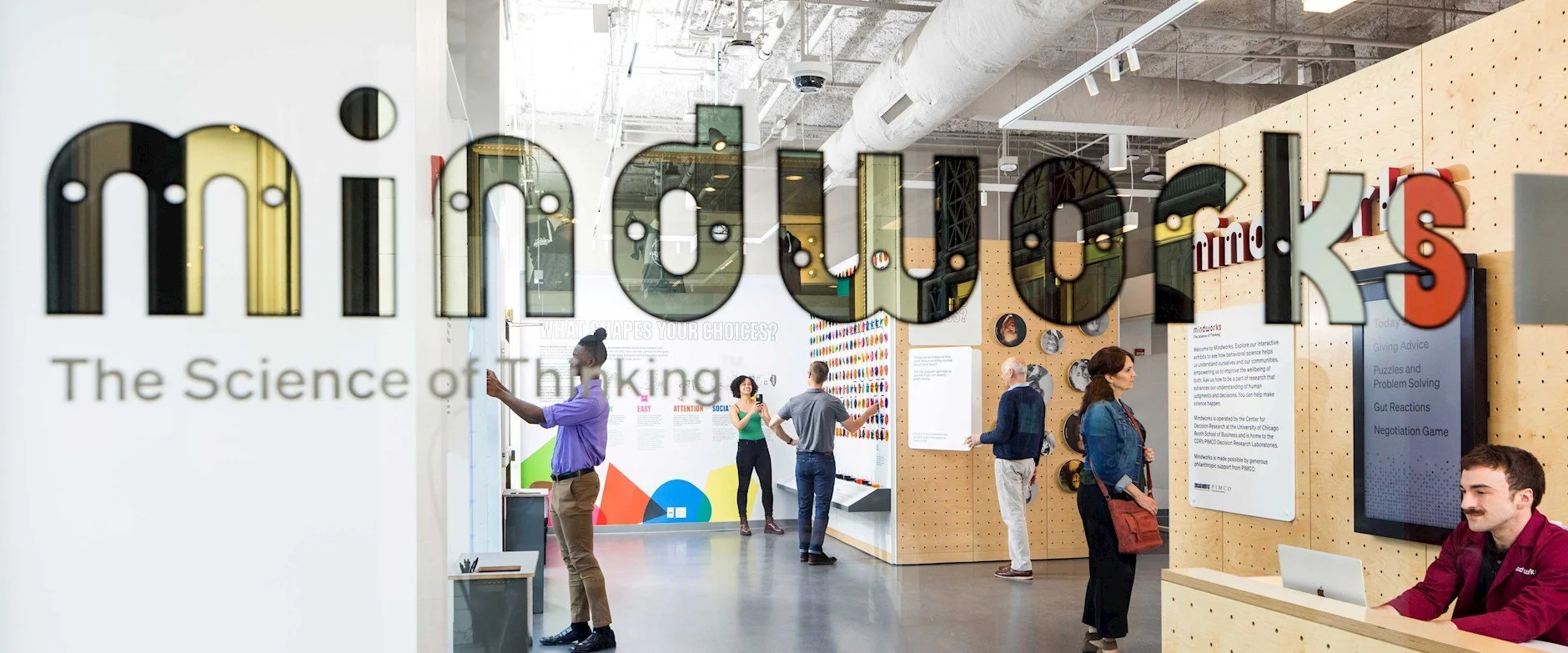
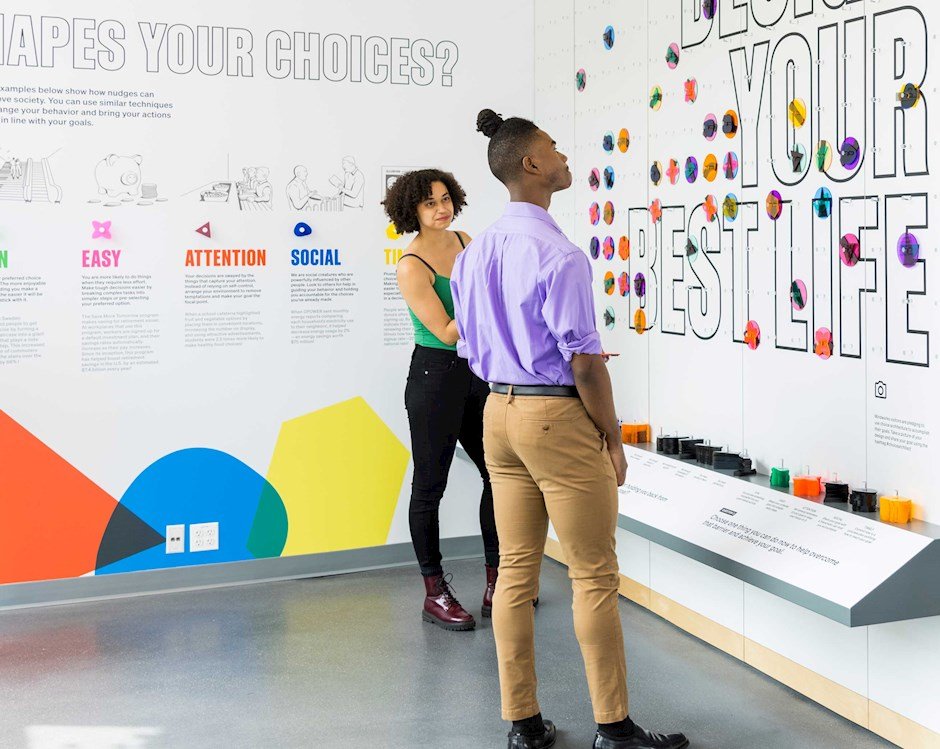
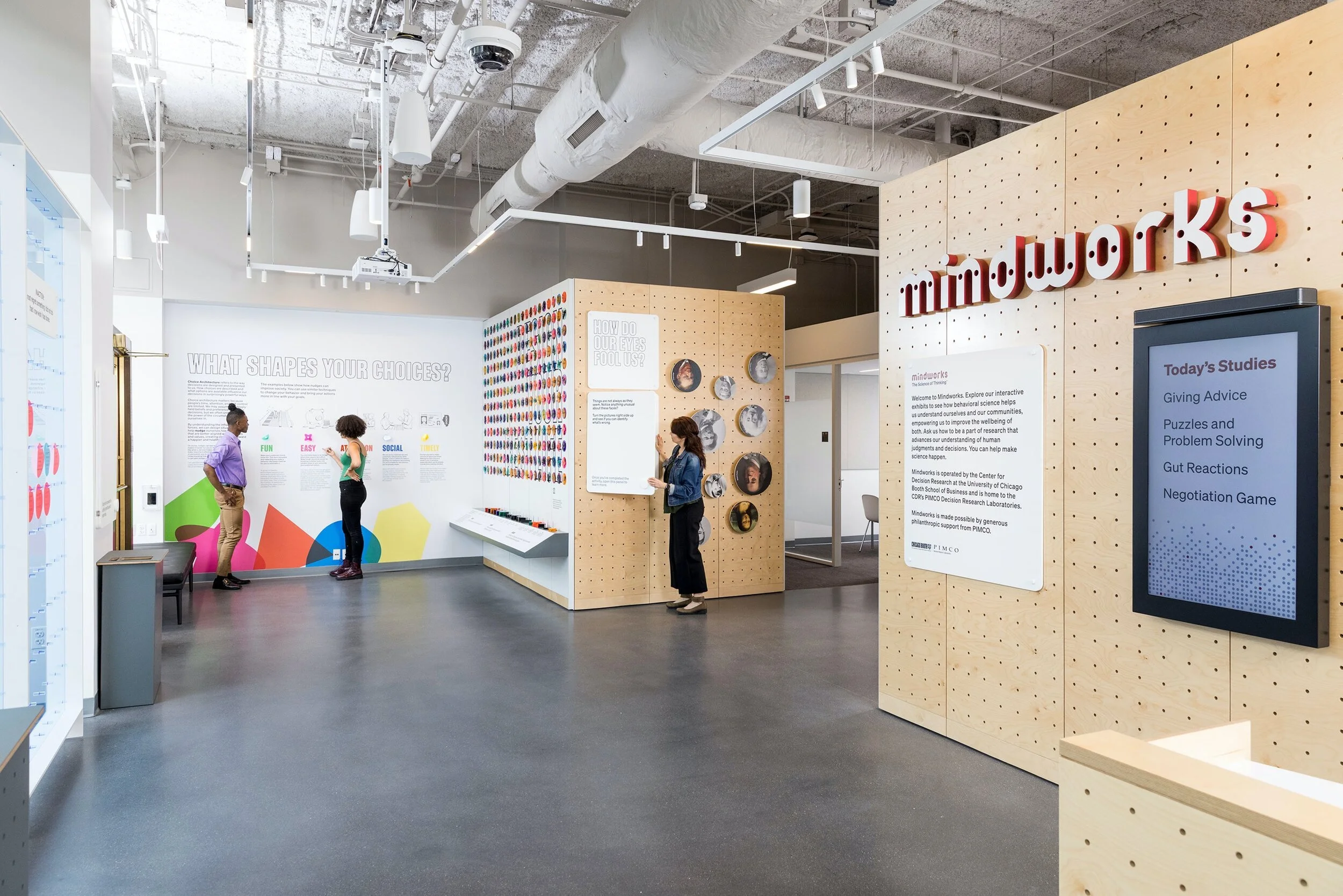
Since Mindworks opened in 2021, more than 33,000 visitors from 70+ countries have already visited the space!
The experience also has a 5-star rating on TripAdvisor with several reviews mentioning the Points System, which I was directly responsible for designing.